EN
EN

What Is a Single-Pass Printer and How Does It Work?
A single-pass printer represents a fundamental shift in printing mechanics. Unlike traditional printers that move a printhead back and forth across the material, a single-pass printer uses a fixed array of printheads that spans the entire width of the substrate. As the material moves continuously beneath this stationary array, the printer completes the entire image in just one pass. Think of it like a wide gate with hundreds of tiny sprayers – as the paper or fabric passes underneath, all colors are applied at once. This eliminates the need for the printhead to "scan" or "shuttle" across the page multiple times, saving an enormous amount of time with every single job.
Eliminating the Back-and-Forth: The Speed Advantage of Single-Pass Printing
The most dramatic benefit of a single-pass printer is its raw speed. In traditional multi-pass (or scanning) printers, the printhead must travel across the media, stop, return to the starting side, index the media forward, and then start again. Those moments of accelerating, decelerating, and reversing add up quickly. A single-pass printer removes this wasted motion entirely. Because the printheads are stationary and the substrate moves continuously, production speeds can be 3 to 5 times faster than even the most productive multi-pass printers. For businesses running high-volume orders for packaging, labels, or signage, this means the difference between completing a job in one day versus three.
Maintaining Precision at High Speeds: Achieving 1200 DPI Without Compromise
Many people assume that higher speed means lower quality. This is not the case with modern single-pass printers. For example, some industrial single-pass systems achieve resolutions of 1200 DPI (dots per inch). This is achieved through Micro-Electro-Mechanical Systems (MEMS) technology, which allows for incredibly tiny and precise ink droplets. Furthermore, because the printheads do not move, the printer eliminates "bidirectional banding" – a common defect in multi-pass printers where ink looks different depending on whether the head was moving left-to-right or right-to-left. The result is sharp, consistent text and vibrant, smooth graphics that meet professional standards for commercial applications.
Reducing Waste and Operational Costs with Single-Pass Technology
Efficiency is not just about time; it is also about resources. In a single-pass printer, the setup or "make-ready" process is drastically reduced. While traditional analog printing might require plate changes that waste hundreds of meters of material, single-pass digital printing requires no plates. Many single-pass systems cut waste by up to 50% compared to older methods. Additionally, because the printer finishes instantly, there is no need for long drying racks or slow curing times. This just-in-time production capability allows businesses to print exactly what is needed, lowering inventory costs and eliminating the waste of obsolete stock.
Practical Applications: Where Single-Pass Printers Excel
The unique combination of high speed and reasonable quality makes the single-pass printer ideal for specific industries. It is the dominant technology for corrugated packaging (cardboard boxes), high-volume labels, and direct-to-metal or ceramic decoration. For example, a single-pass printer can produce customized shipping boxes on-demand at a rate of one box every six seconds. Similarly, in textile printing, single-pass machines allow for on-demand fabric production, enabling fast fashion or custom home décor without the massive minimum order quantities required by screen printing. Any industry where volume is high and turnaround time is critical is a candidate for this technology.
A Look at Shenzhen Shenchuangxing’s Single-Pass Solutions
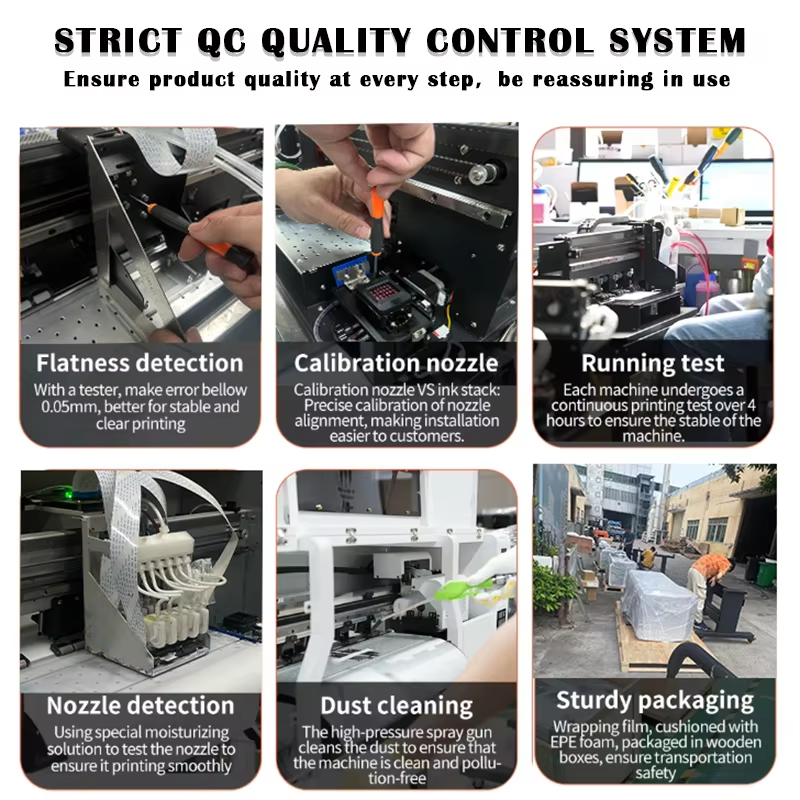
At Shenzhen Shenchuangxing Technology Co., Ltd., we specialize in manufacturing precisely these high-efficiency machines. As a professional digital printer manufacturer, our single-pass printer lineup is built for the rigors of industrial production. We combine robust research and development with strict quality control to ensure our equipment delivers stable, efficient, and scalable printing. Whether you need UV, Eco Solvent, or One Pass printers, our solutions are designed to help global partners move beyond the limitations of shuttle-based systems. By integrating fixed printhead arrays, we help our customers achieve instantaneous drying, vivid color application, and the consistent high-speed output required to stay competitive.
The Future of High-Volume Production
Industry experts widely view single-pass technology as the future of high-volume inkjet printing. As printhead durability increases and ink costs decrease, the barrier to entry for this technology is lowering. For print service providers, adopting a single-pass printer is a strategic move. It allows them to compete with analog printing (like flexography or screen printing) on cost while retaining the flexibility of digital (allowing for versioning and short runs). In a market demanding faster delivery and lower minimum orders, the single-pass printer is no longer a luxury but a necessity for scaling a printing business.
Table of Contents
- What Is a Single-Pass Printer and How Does It Work?
- Eliminating the Back-and-Forth: The Speed Advantage of Single-Pass Printing
- Maintaining Precision at High Speeds: Achieving 1200 DPI Without Compromise
- Reducing Waste and Operational Costs with Single-Pass Technology
- Practical Applications: Where Single-Pass Printers Excel
- A Look at Shenzhen Shenchuangxing’s Single-Pass Solutions
- The Future of High-Volume Production