EN
EN

Glass bottles are everywhere — from the perfume bottle on your vanity to the craft beer bottle in your fridge. What makes many of these bottles stand out is not just the product inside, but the print on the outside. Creating durable, high-quality printed glass bottles requires choosing the right printing technique, understanding how ink bonds to glass, and knowing which equipment can deliver consistent results. This article explores the most effective techniques for printing on glass bottles, with practical insights drawn from real-world UV printing solutions offered by Shenzhen Shenchuangxing Technology Co., Ltd.
Why Glass Bottle Printing Requires Specialized Techniques
Printing on glass is fundamentally different from printing on paper, plastic, or fabric. Glass has a non-porous, ultra-smooth surface that provides almost no mechanical grip for ink. This means that ink adhesion depends entirely on chemical bonding and proper surface preparation. Without the right technique, prints on glass bottles can peel, scratch, or fade within weeks.
Another challenge is shape. Most glass bottles are cylindrical, tapered, or curved — not flat. A printing method that works perfectly on a flat sheet of glass may fail on a round wine bottle because the printhead or screen cannot maintain consistent contact. Additionally, glass bottles in real-world use face moisture from condensation, temperature swings during pasteurization or refrigeration, and frequent handling. Any printing technique selected for printed glass bottles must produce graphics that survive these conditions throughout the product's entire lifecycle.
UV Digital Printing: The Modern Standard for Glass Bottle Decoration
Among all available methods, UV digital printing has emerged as the most versatile and efficient technique for decorating glass bottles. This technology uses piezoelectric printheads to jet UV-curable inks directly onto the glass surface, with each ink droplet cured instantly by UV-LED lamps. The result is a print that is dry to the touch immediately after printing — no waiting, no baking, no additional drying steps.
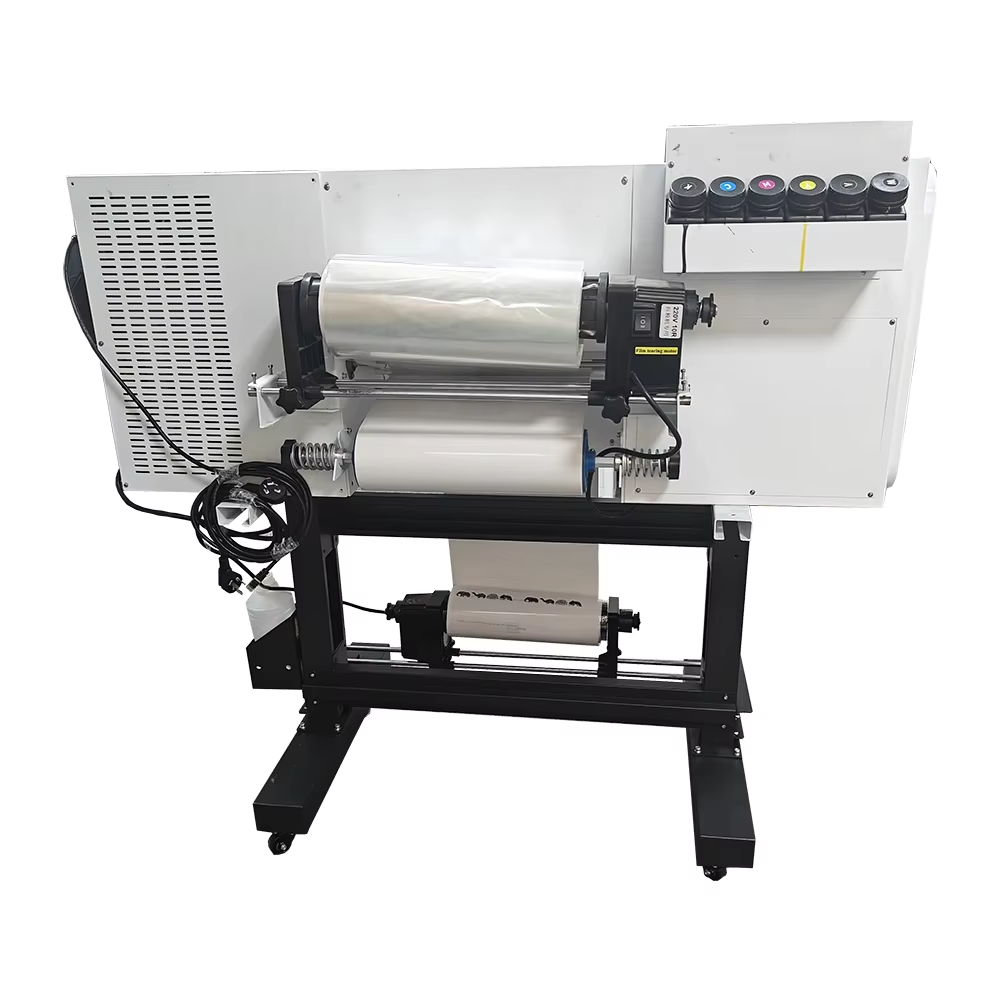
Shenzhen Shenchuangxing Technology Co., Ltd. offers advanced UV DTF (Direct-to-Film) printers and UV flatbed printers specifically engineered for glass decoration. These machines can print on various glass types including clear, frosted, tempered, and colored glass. The UV curing process creates a strong chemical bond between the ink and the glass surface, producing prints that are highly resistant to scratches, fading, and weathering. For businesses producing printed glass bottles — whether for cosmetics, beverages, or promotional merchandise — UV digital printing delivers vibrant colors, fine detail, and photo-realistic gradients that screen printing simply cannot match. Moreover, because UV digital printing requires no screens, plates, or tooling, it supports single-piece prototyping and variable data printing, making it ideal for brands that need frequent design changes or short-run production.
Screen Printing: The Traditional Workhorse for High-Volume Runs
Screen printing remains a practical choice for large-volume glass bottle decoration. In this method, ink is pushed through a fine mesh stencil onto the bottle surface, creating a thick, opaque layer of color. Screen printing excels when the design uses one or two solid colors and the production run is measured in thousands or tens of thousands of units. The thick ink deposit provides excellent coverage on dark-colored glass, which is why many spirit bottles and olive oil bottles feature screen-printed labels.
However, screen printing has clear limitations for printed glass bottles. Each additional color requires a separate screen and setup process, making multi-color designs expensive and time-consuming. Fine details, gradients, and photographic images are difficult to reproduce accurately. Setup costs are high, meaning short runs are not economical. For brands that need flexibility, short turnaround times, or complex multi-color designs, UV digital printing offers a more practical alternative.
Surface Pretreatment: The Foundation of Long-Lasting Prints
No matter which printing technique is chosen, surface preparation is the single most important step for achieving durable printed glass bottles. Glass surfaces carry invisible contamination from the manufacturing process — mold release agents, handling oils, and atmospheric dust — that can act as a barrier between ink and glass. If these contaminants are not removed, prints will eventually delaminate.
The most effective pretreatment methods include flame treatment and plasma treatment. Flame treatment passes the glass surface through a controlled gas flame that oxidizes surface contaminants and raises the surface energy, typically above 50 dynes per centimeter. This makes the glass more receptive to ink bonding. Plasma treatment achieves similar results using ionized gas. For businesses using Shenchuangxing UV printers, proper pretreatment combined with UV-curable inks creates an exceptionally strong bond. The UV inks cure instantly under UV-LED light, locking the design onto the glass with a finish that withstands moisture, temperature cycling, and repeated handling — exactly what printed glass bottles need for real-world durability.
Choosing the Right Equipment for Your Glass Bottle Printing Needs
Selecting the right printing equipment depends on several factors: production volume, design complexity, bottle shape, and budget. For businesses that print on glass bottles regularly and need flexibility, UV flatbed printers and UV DTF printers from Shenzhen Shenchuangxing Technology Co., Ltd. provide a compelling solution. These machines are built in the company's 2,500-square-meter production facility and backed by a dedicated R&D team with proprietary design patents.
The company's 6090 UV Printer, for example, delivers high-resolution output on glass, wood, metal, and plastic with a user-friendly interface suitable for both beginners and experienced operators. For glass bottle applications, UV DTF printers offer the unique advantage of printing onto a film that can then be transferred to curved or irregular bottle surfaces — solving the geometry challenge that frustrates many traditional printing methods. With reliable after-sales support and a global reputation for quality, Shenchuangxing's UV printing solutions help businesses produce printed glass bottles that are visually striking, physically durable, and commercially successful.
Practical Tips for Getting the Best Results on Glass Bottles
Achieving professional-quality printed glass bottles requires attention to detail beyond just choosing the right machine. First, always clean glass bottles thoroughly before printing — even brand-new bottles straight from the manufacturer can carry invisible residues. Second, test your design on a sample bottle before committing to a full production run; glass type, curvature, and color all affect how the final print looks. Third, consider the end-use environment: bottles destined for cold-chain distribution or outdoor display need prints with extra durability. UV-curable inks from Shenchuangxing printers are formulated to handle these demanding conditions, providing scratch-resistant, weatherproof results. Finally, invest in proper operator training — even the most advanced printer will underperform without skilled handling. With the right technique, equipment, and preparation, printing on glass bottles becomes a reliable, repeatable process that elevates any brand's packaging.
Table of Contents
- Why Glass Bottle Printing Requires Specialized Techniques
- UV Digital Printing: The Modern Standard for Glass Bottle Decoration
- Screen Printing: The Traditional Workhorse for High-Volume Runs
- Surface Pretreatment: The Foundation of Long-Lasting Prints
- Choosing the Right Equipment for Your Glass Bottle Printing Needs
- Practical Tips for Getting the Best Results on Glass Bottles