EN
EN

Why Waterproof Performance Matters for Decal Buyers
Anyone who has ordered custom decals for product branding, promotional items, or retail displays knows the frustration of watching those graphics peel, fade, or dissolve after exposure to moisture. Whether the application involves drinkware that goes through dishwashers, outdoor signage that faces rain, or cosmetic packaging that encounters humidity, the waterproof quality of a printed decal determines whether it survives real-world conditions or becomes wasted inventory. This is the exact problem that prompts many print shop owners and product decorators to ask whether a UV DTF stickers printer can deliver the water resistance their customers demand. The short answer is yes, and the technology behind it explains why.
How UV DTF Printing Technology Works
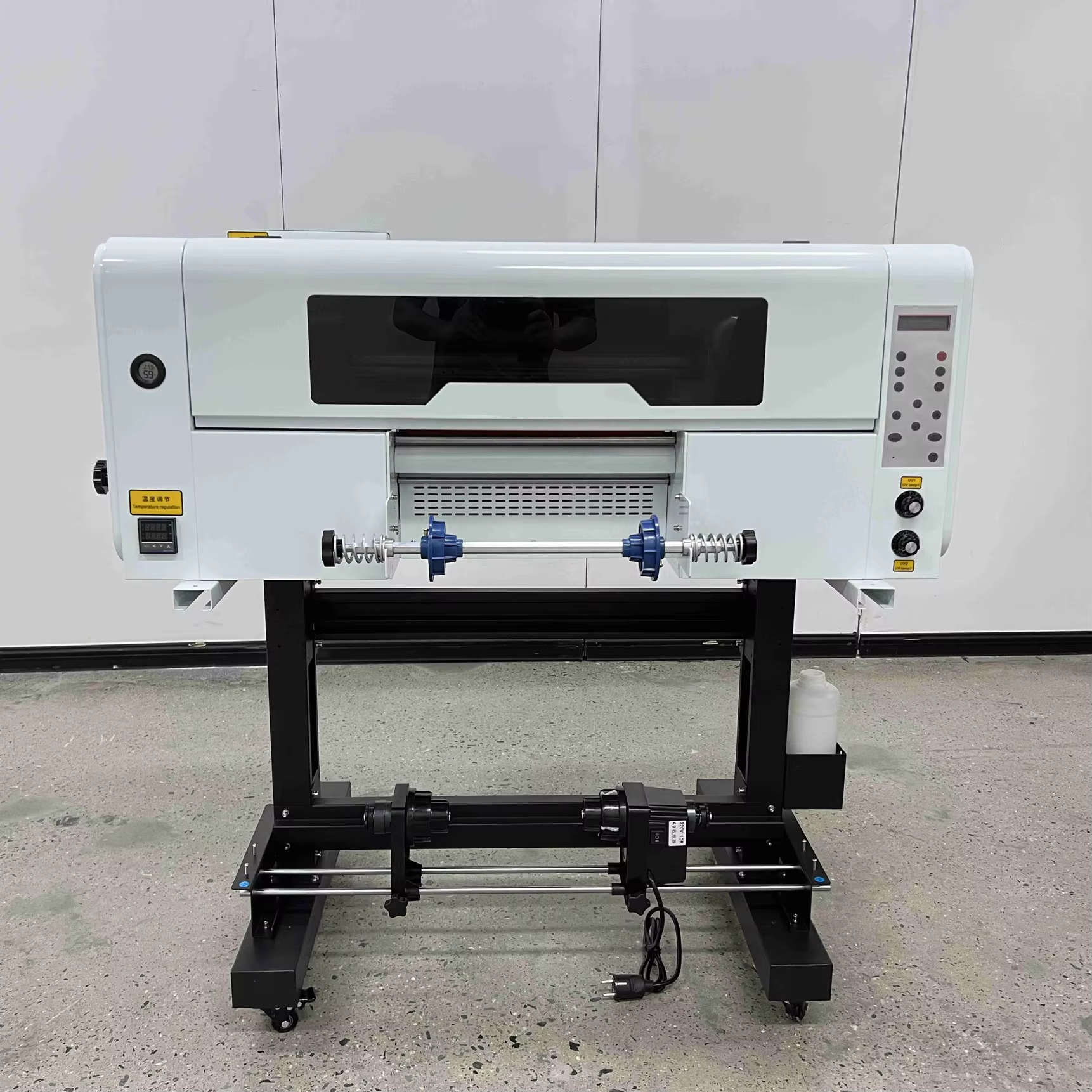
A UV DTF stickers printer operates through a multi-step process that fundamentally differs from traditional decal production methods. The printer first lays down UV-curable ink onto a specialized AB film, which consists of two layers: the A film serves as the release layer, and the B film acts as the adhesive base. After the ink is deposited, an integrated UV lamp instantly cures each layer using ultraviolet light, transforming the liquid ink into a solid polymer. A varnish or clear coat layer is typically printed on top to seal the design. Once printing is complete, the A film is peeled away, and the design on the B film can be pressed onto virtually any smooth surface. The adhesive on the B film bonds to the substrate, and the result is a vivid, high-resolution decal that resists scratching, moisture, and UV fading. Shenzhen Shenchuangxing Technology Co., Ltd. manufactures UV DTF printers in 30cm and 60cm widths that follow this exact workflow, along with compatible UV DTF ink in CMYKW plus varnish formulations and low-temperature AB film designed for crystal label applications.
The Science Behind Waterproof Performance
The waterproof capability of decals from a UV DTF stickers printer comes from two key factors: the chemistry of UV-cured ink and the protective varnish overlay. When ultraviolet light strikes the photoinitiators within the ink formulation, a rapid polymerization reaction occurs, cross-linking the ink molecules into a dense, chemically stable film. Unlike solvent-based or water-based inks that rely on evaporation and remain somewhat porous after drying, UV-cured ink forms a continuous, non-porous surface that water cannot penetrate. The varnish layer printed on top adds a second barrier, sealing any microscopic gaps and creating a smooth, glossy finish that repels water. In practical terms, this means decals produced by a UV DTF stickers printer can withstand rain, splashing, and even brief submersion without ink bleeding, color degradation, or adhesive failure. For businesses producing crystal labels for glass bottles or promotional stickers for outdoor equipment, this level of water resistance is a functional requirement, not a luxury.
Comparing UV DTF With Other Decal Printing Methods
Understanding how UV DTF stacks up against alternative technologies helps buyers make informed decisions. Screen printing has long been the standard for durable decals, and its thick ink deposits do offer strong water resistance. However, screen printing requires separate screens for each color, significant setup time, and high minimum order quantities that make short runs economically impractical. Vinyl cutting produces waterproof graphics by cutting solid-colored vinyl, but it cannot reproduce photographic images, gradients, or fine detail. Standard DTF printing uses a heat-press process with PET film and adhesive powder, which provides good color range but relies on heat-activated adhesives that can soften in high-temperature or high-moisture environments. A UV DTF stickers printer combines the color vibrancy and detail of digital printing with the instant-cure durability of UV technology, and it requires no heat press for application. The AB film transfer method also means decals can adhere to surfaces that resist heat pressing, such as temperature-sensitive plastics or pre-filled containers.
Adhesion Across Different Substrates
One of the practical advantages of UV DTF decals is their ability to bond to a wide variety of materials. The adhesive on the B film is formulated to grip smooth, non-porous surfaces effectively. Glass bottles, stainless steel containers, acrylic display cases, ceramic mugs, and hard plastic packaging all accept UV DTF transfers with strong initial tack and long-term adhesion. For crystal label applications, where the decal must conform to the smooth surface of glassware or crystal items, the low-temperature AB film from manufacturers like Shenzhen Shenchuangxing Technology Co., Ltd. ensures a clean transfer without thermal damage. It is worth noting that textured, heavily curved, or extremely oily surfaces may require surface preparation or testing before full production runs. Print operators should also allow 24 to 48 hours after application for the adhesive to reach full bond strength before exposing the decorated item to water or abrasion.
Real-World Application: A Beverage Brand's Experience
A mid-size beverage company in Southeast Asia needed waterproof labels for a new line of flavored sparkling water sold in glass bottles. The bottles were stored in refrigerators and coolers where condensation was constant, and the brand's previous labels, printed with conventional methods, would blur and peel within days of refrigeration. After switching to a UV DTF stickers printer, the company produced crystal-clear labels with photographic fruit imagery that survived not only refrigeration but also ice-bucket immersion during restaurant service. The labels maintained their color and adhesion for over six months under typical retail conditions. The company reported a reduction in label-related customer complaints by more than seventy percent and was able to produce shorter label runs to match seasonal flavor launches without paying screen-printing setup fees. This type of application illustrates why UV DTF is gaining traction in industries where both visual quality and environmental durability are non-negotiable.
Outdoor Durability and Maintenance Expectations
While UV DTF decals are waterproof, outdoor durability depends on several variables. Direct, prolonged sunlight exposure will eventually cause color fading in any printed material, and UV DTF inks are no exception. Most UV-cured ink systems maintain acceptable color integrity for one to two years in outdoor settings before noticeable fading occurs, and the varnish layer does provide a degree of UV protection that extends this timeframe compared to uncoated prints. For applications like outdoor signage, vehicle graphics, or garden product labeling, businesses should communicate realistic lifespan expectations to end users rather than implying permanent durability. Adding a secondary clear coat or lamination can extend outdoor life to three or more years. Temperature extremes, chemical exposure, and physical abrasion also affect longevity, so each application should be tested under actual use conditions before committing to large production volumes. A UV DTF stickers printer gives operators the flexibility to run small test batches quickly and affordably, which is a significant advantage over screen printing where testing requires new screen setups.
Table of Contents
- Why Waterproof Performance Matters for Decal Buyers
- How UV DTF Printing Technology Works
- The Science Behind Waterproof Performance
- Comparing UV DTF With Other Decal Printing Methods
- Adhesion Across Different Substrates
- Real-World Application: A Beverage Brand's Experience
- Outdoor Durability and Maintenance Expectations