Digital printing has moved far beyond paper-based applications. Across advertising, decoration, packaging, and industrial manufacturing, there is a growing demand for printing solutions that can handle diverse materials, complex surfaces, and long-te...
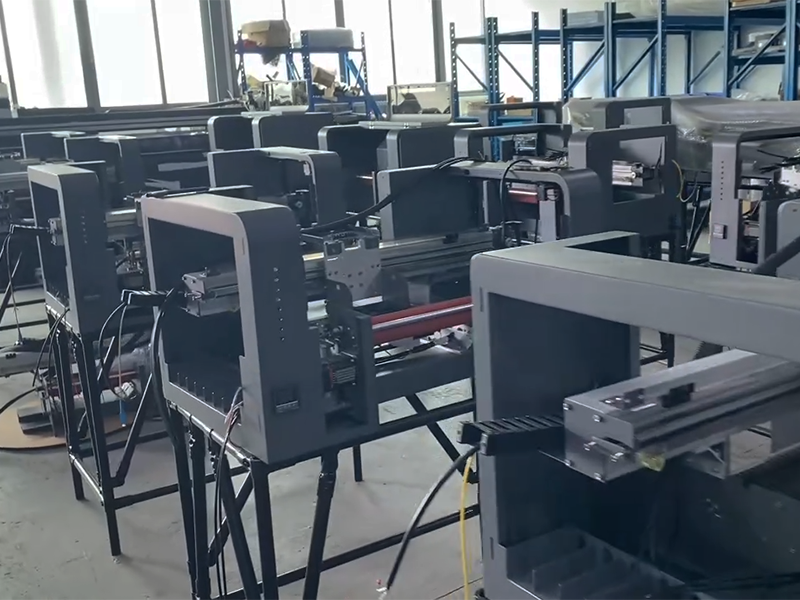
Digital printing has moved far beyond paper-based applications. Across advertising, decoration, packaging, and industrial manufacturing, there is a growing demand for printing solutions that can handle diverse materials, complex surfaces, and long-term durability requirements. In this context, UV printers have become one of the most versatile and widely adopted technologies in modern printing environments.
UV printing technology is valued not only for its visual quality, but also for its ability to support rigid and flexible substrates that were previously difficult or impossible to print using traditional ink systems. As application scenarios continue to expand, UV printers play an increasingly important role in commercial and industrial production workflows.
How UV Printing Technology Works
UV printing uses ultraviolet light to instantly cure ink as it is deposited onto the material surface. Unlike solvent or water-based inks, UV inks do not rely on evaporation or absorption. Instead, the ink hardens immediately when exposed to UV light, forming a solid layer on the substrate.
This curing process allows UV printers to print on materials such as glass, acrylic, metal, wood, plastic, ceramic, leather, and composite boards. Because the ink remains on the surface rather than soaking into the material, colors appear vivid and sharp, with strong resistance to scratching, fading, and chemical exposure.
From a technical perspective, a UV printing machine requires precise coordination between printheads, motion systems, and UV curing lamps. Stability in these components directly affects print quality, adhesion, and long-term reliability. When properly engineered, UV printers deliver consistent output across different materials and production conditions.
Material Versatility and Application Expansion
One of the defining advantages of UV printers is their ability to support a wide range of substrates without additional coating or pre-treatment. This versatility significantly expands application possibilities and reduces reliance on outsourced processes.
In practical use, UV printers are commonly applied in signage production, decorative panels, customized promotional items, packaging prototypes, and industrial components. UV flatbed printers are particularly suitable for rigid materials, while roll-to-roll UV printers support flexible media such as PVC films and wallpapers. UV DTF printing has further extended application potential by enabling transfer-based decoration on irregular surfaces.
This broad material compatibility allows printing operations to serve multiple industries using a single technology platform. Instead of investing in separate machines for different applications, UV printing provides a consolidated solution that adapts to changing production demands.
Addressing Durability and Quality Requirements
Durability is a critical factor in many printing applications, especially those exposed to outdoor environments or frequent handling. Traditional ink systems may suffer from fading, peeling, or abrasion over time, leading to increased maintenance and replacement costs.
UV printing addresses these concerns by producing prints with strong adhesion and resistance. The cured ink layer forms a durable surface that withstands environmental exposure and physical wear. This makes UV printers particularly suitable for outdoor signage, industrial labels, control panels, and decorative surfaces that require long-term performance.
Print quality is another important consideration. UV printers are capable of high-resolution output with sharp edges and accurate color reproduction. The ability to layer ink and create textured effects also adds value in decorative and branding applications, where visual impact is a key requirement.
Production Efficiency and Workflow Integration
UV printing contributes to production efficiency by eliminating drying time. Since the ink cures instantly, printed items can be handled, cut, or assembled immediately after printing. This reduces turnaround time and improves workflow continuity, especially in time-sensitive projects.
In manufacturing environments, UV printers are often integrated into broader production lines. Their ability to print directly onto finished or semi-finished components simplifies processes and reduces the need for additional labeling or decoration steps.
For operations managing multiple product types, UV printing offers flexibility without compromising efficiency. Switching between materials or designs typically requires minimal setup adjustments, allowing production schedules to remain dynamic and responsive.
Machine Design and Operational Stability
Despite its advantages, UV printing places high demands on machine design. Uneven curing, ink adhesion issues, or inconsistent color output often result from insufficient integration between mechanical structure and electronic control systems.
A professionally manufactured UV printer features a rigid frame structure, accurate motion control, and stable UV curing units. These elements ensure consistent ink deposition and uniform curing across the entire print area. Proper heat management is also essential to protect sensitive materials from deformation during printing.
Operational stability directly affects production costs. Frequent maintenance, component failure, or print defects increase downtime and material waste. Evaluating machine build quality and long-term reliability is therefore essential when considering UV printing equipment.
Cost Considerations and Long-Term Value
UV printers generally represent a higher initial investment compared to some other digital printing technologies. However, their ability to serve multiple applications and materials often offsets this cost over time. Reduced outsourcing, lower consumable waste, and expanded service offerings contribute to a favorable long-term value proposition.
In addition, UV printing supports premium applications where durability and visual quality justify higher pricing. This allows printing operations to move beyond price-based competition and focus on value-added services.
Interest in factory-direct UV printer solutions continues to grow as businesses seek greater control over quality, configuration, and technical support. Direct cooperation with a professional UV printer manufacturer provides access to optimized machine designs, customization options, and consistent production standards.
The Role of UV Printers in Modern Printing Markets
UV printers have established themselves as a core technology in both commercial and industrial printing. Their ability to bridge creative design and functional durability makes them suitable for a wide range of applications, from branding and decoration to industrial marking.
Rather than replacing all traditional printing methods, UV printing complements existing technologies by addressing specific material and durability challenges. As product customization and material diversity continue to shape market demand, UV printers offer a reliable foundation for expanding application capabilities.
Successful UV printing operations depend on more than ink and resolution. Machine stability, application understanding, and manufacturing support determine long-term performance. When these elements are aligned, UV printing becomes a powerful tool for meeting modern production requirements.
Shenzhen Shenchuangxing provides DTF, UV DTF, and flatbed printers for global print businesses. Our patented tech, strict QC, and custom configurations ensure efficiency, stability, and reliability. Trusted by clients worldwide. Request a quote today.
Room 202, Building A, No. 10, Cichang Road, Baoan Community, Yuanshan Subdistrict, Longgang District, Shenzhen, Guangdong Province, China
Copyright © 2026 by Shenzhen Shenchuangxing Technology Co., Ltd. Privacy Policy
 EN
EN