As printing applications continue to expand into packaging, decoration, and industrial manufacturing, production efficiency has become a defining factor in equipment selection. In environments where output volume, consistency, and delivery speed dete...
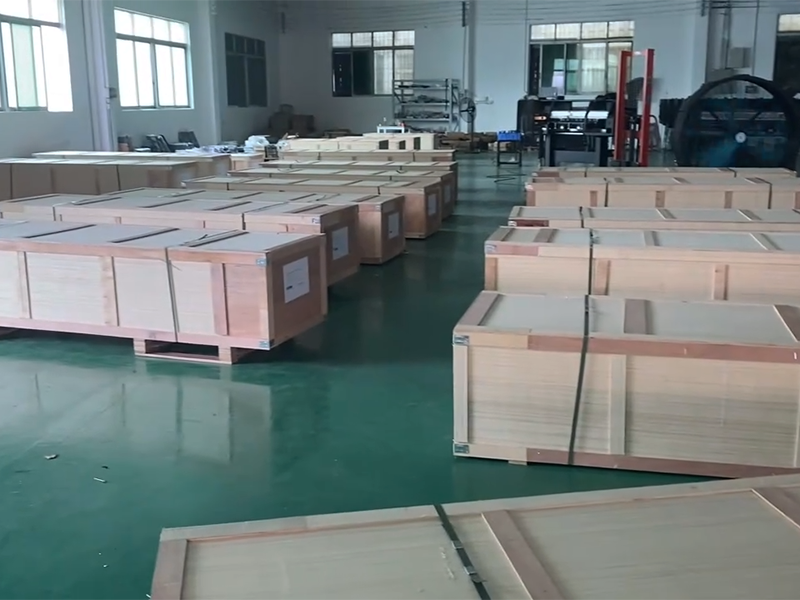
As printing applications continue to expand into packaging, decoration, and industrial manufacturing, production efficiency has become a defining factor in equipment selection. In environments where output volume, consistency, and delivery speed determine competitiveness, traditional multi-pass printing methods often struggle to meet modern production demands. One pass printers are designed specifically to address this gap by enabling continuous, high-speed digital printing at an industrial scale.
Unlike conventional digital printers that require multiple passes of the printhead carriage to build an image, one pass printers complete printing in a single pass as the material moves through the machine. This fundamental difference in working principle allows one pass printing machines to achieve dramatically higher speeds while maintaining consistent image alignment and color density.
Understanding the One Pass Printing Principle
One pass printing relies on a fixed array of printheads positioned across the full width of the substrate. As the material feeds through the system, the printheads deposit ink simultaneously, completing the image in one continuous movement. This configuration eliminates repeated carriage motion and significantly reduces mechanical complexity during operation.
Because printing occurs in a single pass, production speed is limited primarily by ink curing and material handling rather than printhead movement. In industrial environments, this translates into high throughput with predictable output, making one pass printers suitable for continuous production lines.
This printing principle is commonly applied in corrugated packaging, decorative boards, industrial panels, textiles, and large-format graphic production, where speed and volume are critical performance indicators.
Solving Bottlenecks in High-Volume Production
In many industrial printing scenarios, the primary challenge is not image quality alone, but the ability to meet large order quantities within tight delivery schedules. Multi-pass digital printers may offer high resolution, but their limited speed often creates bottlenecks as order volumes increase.
One pass printers solve this problem by aligning digital printing capability with industrial production rhythms. Continuous feeding systems allow materials to move through the printer at constant speed, enabling thousands of square meters or units to be printed within a single shift. This level of productivity supports mass customization, where variable data or design changes are required without stopping the production line.
For operations transitioning from analog to digital workflows, one pass printing provides a bridge that combines digital flexibility with industrial output capacity.
Consistency and Stability at Scale
Maintaining consistent quality across high-volume runs is one of the most demanding aspects of industrial printing. Variations in ink delivery, curing intensity, or substrate positioning can result in visible defects that multiply quickly when production speed is high.
Industrial one pass printers are engineered with robust frame structures, precision feeding systems, and advanced ink management solutions to ensure uniform output. Fixed printhead arrays reduce alignment errors, while controlled curing systems ensure consistent ink fixation across the entire print width.
Stability is particularly important in packaging and decorative applications, where printed products must meet strict visual and dimensional standards. Reliable one pass printing minimizes waste and rework, directly impacting operational efficiency.
Expanding Digital Printing Into Industrial Applications
One pass technology has enabled digital printing to enter application areas traditionally dominated by analog methods such as flexographic or offset printing. Corrugated boxes, folding cartons, decorative boards, and industrial panels can now be printed digitally at production speeds previously unattainable.
This shift supports shorter production runs, faster design updates, and localized customization without the need for plates or extensive setup. As a result, one pass printers are increasingly used in packaging lines that require frequent artwork changes or variable information printing.
In decorative and industrial surface printing, one pass printers support consistent pattern reproduction across large volumes, making them suitable for applications such as furniture panels, flooring elements, and architectural materials.
Engineering Considerations for Industrial Reliability
The performance of a one pass printer depends heavily on engineering quality. High-speed operation places significant demands on mechanical stability, ink supply precision, and electronic control systems. Any inconsistency at this level is amplified by production speed.
Well-designed one pass printing machines incorporate rigid chassis construction, precise substrate guidance, and advanced control software to synchronize printing and material movement. Ink systems must deliver stable flow at high volume, while curing units must match line speed without compromising adhesion.
These factors collectively determine whether a one pass printer can operate reliably in continuous production environments rather than short demonstration runs.
Cost Efficiency and Long-Term Production Value
While one pass printers typically require a higher initial investment than conventional digital printers, their value lies in cost efficiency at scale. High throughput reduces labor cost per unit, while digital workflow eliminates expenses associated with plates, screens, and setup waste.
For production environments processing large volumes daily, the ability to maintain speed without sacrificing quality leads to lower average production costs over time. This makes one pass printing a strategic investment for operations focused on long-term scalability.
The Role of One Pass Printers in Future Manufacturing
One pass printers represent a significant step in the industrialization of digital printing. By combining speed, consistency, and digital flexibility, they align printing technology with modern manufacturing principles such as automation, lean production, and mass customization.
As industries continue to demand faster delivery, flexible design options, and efficient resource use, one pass printing is expected to play an increasingly important role across packaging, decoration, and industrial printing sectors.
The successful implementation of one pass technology depends on selecting equipment designed for real-world production conditions. Machine stability, system integration, and manufacturing support define long-term performance far more than headline speed specifications.

Shenzhen Shenchuangxing provides DTF, UV DTF, and flatbed printers for global print businesses. Our patented tech, strict QC, and custom configurations ensure efficiency, stability, and reliability. Trusted by clients worldwide. Request a quote today.
Room 202, Building A, No. 10, Cichang Road, Baoan Community, Yuanshan Subdistrict, Longgang District, Shenzhen, Guangdong Province, China
Copyright © 2026 by Shenzhen Shenchuangxing Technology Co., Ltd. Privacy Policy
 EN
EN