 EN
EN

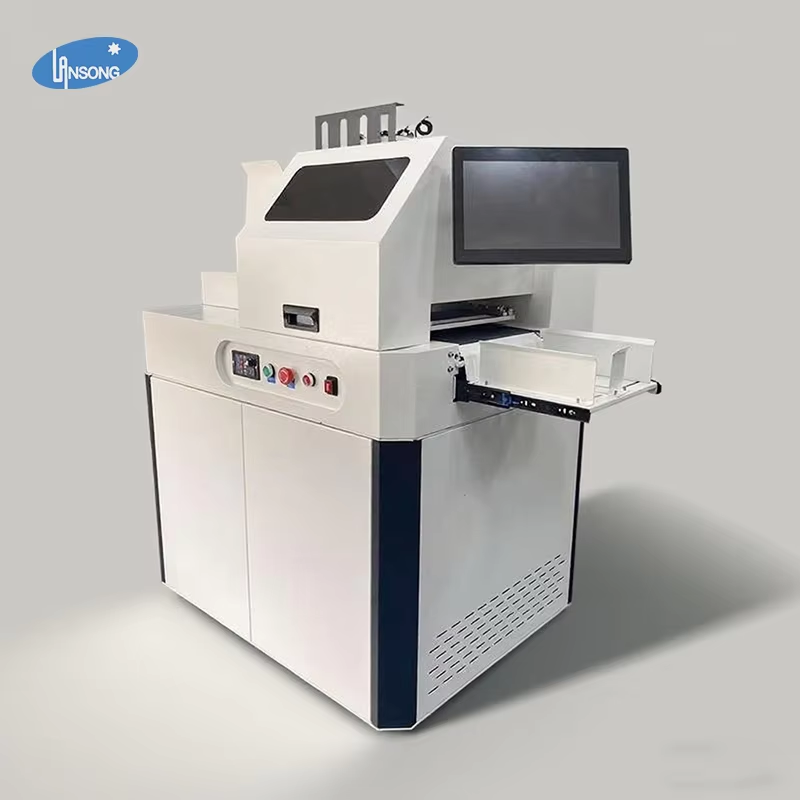
Understanding the Technology Behind High-Resolution Leather Printing
The pursuit of fine detail in leather printing begins not with the leather itself, but with a deep understanding of the technology you are using. As a professional digital printer manufacturer, Shenzhen Shenchuangxing Technology Co., Ltd. emphasizes that achieving photorealistic quality on leather requires a sophisticated interplay of hardware, software, and material science. Unlike printing on paper, leather is a natural, often irregular substrate with unique absorption characteristics . This is where modern UV flatbed and DTF (Direct to Film) printers have revolutionized the industry . The core of precision lies in the printhead technology. High-end machines utilize advanced printheads with microscopic nozzles capable of ejecting variable-sized ink droplets measured in picoliters . This allows for the smooth reproduction of gradients and the sharp definition of fine lines, crucial for applications like detailed logos, intricate patterns, or photographic images on leather goods. Furthermore, the integration of white ink as a standard color channel is not just an option but a necessity. A leather printer must be able to lay down a precise layer of white ink on darker leathers to ensure that the subsequent CMYK colors pop with vibrancy and do not get absorbed or muted by the dark substrate, a capability that our R&D team focuses on perfecting to deliver stable and efficient printing solutions for global partners.
Surface Alchemy: The Critical Role of Leather Preparation and Pretreatment
From our extensive experience in after-sales service and manufacturing, we have observed that the most common point of failure in achieving fine detail is inadequate surface preparation. Expertise in this area is non-negotiable. Leather is not a uniform canvas; it comes as full-grain, top-grain, bonded, or synthetic, each with its own "personality" . Full-grain leather, while the most durable, possesses a natural grain that can disrupt fine detail if not properly managed. The first step is a meticulous cleaning process to remove any residual oils, dust, or tanning agents that could inhibit ink adhesion . However, the true secret to detail is the application of a specialized primer or pretreatment coating. This layer serves a dual purpose: it creates a universally receptive, smooth surface for the ink to bond to and it prevents the ink from wicking or "feathering" along the leather's fibers. For synthetic or coated leathers, a different type of adhesion promoter is often required . At Shenzhen Shenchuangxing Technology Co., Ltd., our professional solutions often include recommendations for specific pretreatment methods tailored to the leather type, ensuring that when you begin printing with our UV or DTF printers, the surface is optimized to hold the finest details without bleeding or distortion.
Mastering the Machine: Optimizing Printer Settings for Tactile Precision
With a prepared canvas and a high-quality leather printer, the next step is the fine art of machine calibration. This is where technical expertise meets practical application to bring out the finest details. Key parameters include print head height, resolution (DPI), and the number of passes. For uneven or textured leather surfaces, setting the correct head gap is crucial to prevent head strikes and ensure accurate dot placement . Printing at a higher resolution, such as 1440x1440 DPI or even 2880x1440 DPI, is essential for detailed work, but it often requires slowing down the print speed and increasing the number of passes . This allows for a more controlled deposition of ink, building up the image layer by layer without oversaturation. Furthermore, the waveform of the ink droplets being fired from the printhead can be adjusted in some advanced systems to control dot gain on the specific leather texture. In our own factory's assembly and testing process, we fine-tune these settings to ensure that our printers deliver stable, high-definition output. This level of control ensures that even the most complex designs with small text or intricate line art are reproduced with photographic accuracy on the final leather product.
The Texture of Detail: Achieving 3D Effects and Haptic Quality
Fine detail is not just a visual experience; it can also be a tactile one. One of the most exciting capabilities of modern digital printing on leather is the creation of raised or textured effects, adding a new dimension to the product. This is achieved through techniques like varnish printing or layering white ink to build relief. By strategically printing multiple layers of clear varnish or opaque white ink, you can create a raised surface that mimics embroidery, creates Braille-like textures, or adds a glossy, dimensional accent to a flat image . This technique, often referred to as "3D UV printing," relies on the printer's ability to deposit precise, consistent layers on top of one another. The LED-UV curing process instantly hardens each layer, allowing for the construction of significant height without the ink spreading. For luxury goods like handbags, belts, or custom footwear, this haptic quality elevates a simple printed image to a premium, hand-crafted feature. Our high-end printing solutions are designed with the precision mechanics required to handle this multi-layer process, enabling designers and manufacturers to explore new creative frontiers in leather customization.
From Print to Product: Ensuring Durability and Longevity of Fine Details
Achieving the fine detail is only half the battle; ensuring that it withstands the rigors of use is what defines true quality. A beautifully detailed print that cracks, fades, or peels after minimal use is a failure. This is where an authoritative understanding of post-print finishing comes into play. Once the image is printed and cured under UV light—a process that instantly hardens the ink and bonds it to the leather's surface or coating—a protective layer is highly recommended . This can be a liquid laminate applied during printing (using the printer itself to lay down a clear coat) or a post-print spray or film. This topcoat provides crucial resistance to scratches, UV light, and moisture, ensuring that the fine details remain crisp and the colors stay vibrant. It is also vital to test the final product's flexibility. Leather is often bent and folded, so the ink and coating must be flexible enough to move with it without cracking . At Shenzhen Shenchuangxing Technology Co., Ltd., we advocate for a holistic approach, working with clients to select inks and finishing techniques that match their product's end-use, thereby building trust in the longevity of our solutions and ensuring that the fine details we help create are built to last.
Table of Contents
- Understanding the Technology Behind High-Resolution Leather Printing
- Surface Alchemy: The Critical Role of Leather Preparation and Pretreatment
- Mastering the Machine: Optimizing Printer Settings for Tactile Precision
- The Texture of Detail: Achieving 3D Effects and Haptic Quality
- From Print to Product: Ensuring Durability and Longevity of Fine Details