 EN
EN

As an expert in the digital printing industry with years of hands-on experience in packaging production lines, I’ve seen how the right equipment can transform a business from a small workshop into a high-efficiency powerhouse. At Pintansi (PTSC), we specialize in high-speed digital inkjet solutions that bridge the gap between traditional craftsmanship and modern automation.
The following guide explores the Key Features of a Corrugated Box Printer, blending technical expertise with practical insights to help you make an informed decision for your packaging needs.
High-Resolution Precision and Print Head Technology
When we talk about a corrugated box printer, the heart of the machine is its print head. In my years of troubleshooting and optimizing production lines, I’ve found that the transition from traditional flexo to high-resolution digital inkjet is the single biggest "level up" for any brand. Most modern industrial printers, like those we develop at PTSC, utilize Piezoelectric print heads. These allow for variable droplet sizes, meaning you get sharp text and vibrant gradients without the "bleeding" effect often seen on porous cardboard. For a professional finish, you should look for a machine capable of at least 600 x 1200 DPI. This ensures that even small QR codes or intricate logos—essential for modern traceability—remain crisp and scannable.
Industrial-Grade Printing Speed and Throughput
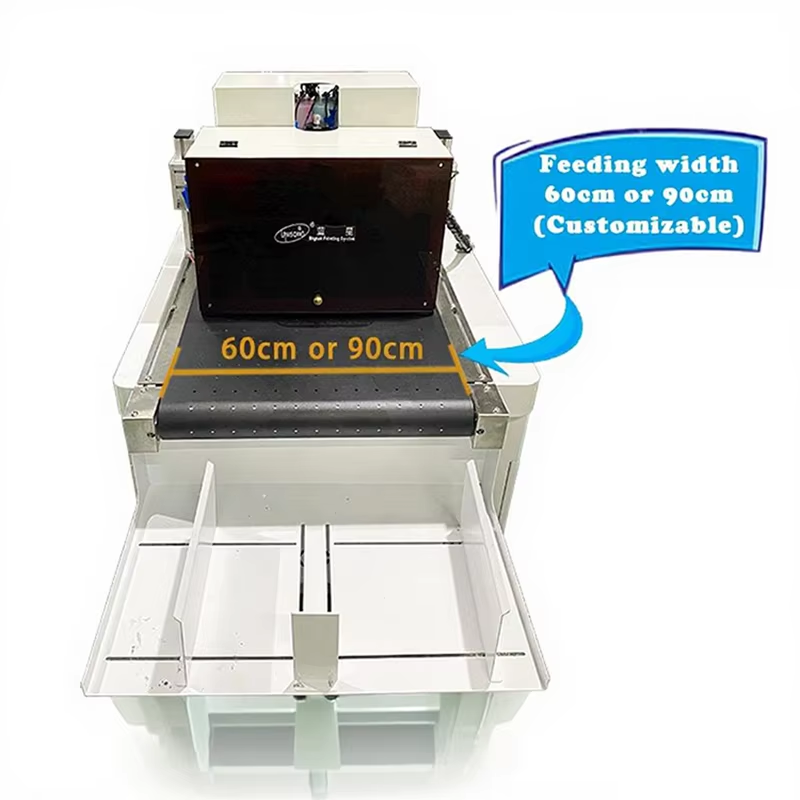
Efficiency is the currency of the manufacturing world. Based on our internal case studies at PTSC, switching to a high-speed corrugated box printer can reduce turnaround times by up to 70% compared to traditional methods. A key feature to look for is the linear speed, often measured in meters per minute. For high-volume demands, a printer should comfortably handle 30–80 meters per minute without compromising image quality. This speed is achieved through advanced media feeding systems that prevent jams—a common headache I’ve seen in lower-end models. Professional-grade machines use vacuum suction belts to keep the corrugated sheets perfectly flat as they fly under the print heads.
Intelligent Ink Systems and Eco-Friendly Solutions
Sustainability is no longer a "nice-to-have"; it is a market requirement. In the digital printing space, the ink system defines both your cost-per-print and your environmental footprint. A top-tier corrugated box printer should utilize water-based pigment inks. These inks are non-toxic, odorless, and food-safe, which is critical if you are printing packaging for the F&B industry. From an operational standpoint, look for a printer with an automated ink circulation system. This prevents the ink from settling or clogging the nozzles during downtime—a feature that has saved our clients thousands of dollars in maintenance costs and replacement parts.
Seamless Workflow Integration and Software Compatibility
One of the most overlooked features of a corrugated box printer is the RIP (Raster Image Processor) software. In my experience, even the best hardware is useless if the software is a nightmare to navigate. Modern digital printers must offer "One-Click" printing capabilities. This means the machine can accept PDF, TIFF, or AI files directly and process them instantly. This feature is vital for the "small batch, high frequency" trend we see in e-commerce today. At PTSC, we focus on making the interface as intuitive as a smartphone, allowing operators to adjust color profiles and print quantities on the fly without needing a degree in computer science.
Media Versatility and Automatic Thickness Adjustment
Corrugated board comes in various grades, from thin E-flute to heavy-duty double-wall sheets. A versatile corrugated box printer must be able to adapt to these differences automatically. I recall a client who struggled with manual head-height adjustments that led to frequent "head strikes" (when the board hits the print head), causing expensive damage. A premium feature to insist on is an infrared sensor system that detects the thickness of the board and adjusts the print head gap in real-time. This not only protects your investment but also ensures consistent color density across different types of cardboard stock.
Low Maintenance Design and Long-Term Reliability
The true cost of a corrugated box printer isn't the price tag; it's the cost of downtime. When analyzing the ROI of printing equipment, I always emphasize the "User-Serviceable" aspect. A well-designed printer features a modular layout where parts like filters, wipers, and pumps are easily accessible. Additionally, look for machines that offer remote diagnostic capabilities. At PTSC, we’ve found that being able to log in to a machine's system from a different continent to troubleshoot a software glitch can mean the difference between a minor delay and a week-long production halt. Reliability is built into the frame, usually requiring a heavy-duty steel structure to minimize vibrations during high-speed runs.
Cost-Effective Small Batch Production Capability
The traditional printing industry is plagued by "plate-making" costs. If you only need 50 boxes for a seasonal promotion, traditional flexo printing is prohibitively expensive. This is where the digital corrugated box printer shines. Because there are no plates involved, the cost of the first print is the same as the thousandth. This feature allows businesses to offer personalized packaging and "Just-In-Time" (JIT) delivery. In our recent projects, we’ve seen small-to-medium enterprises (SMEs) double their profit margins by eliminating the waste associated with over-ordering boxes just to meet minimum order quantities.
Summary of Key Features for Your Business
When choosing your next piece of equipment, remember that a corrugated box printer is an investment in your brand's agility. From high-resolution output and eco-friendly inks to automated thickness sensors and seamless software, these features work in harmony to deliver a professional product. By focusing on industrial-grade reliability and ease of use, you ensure that your production line remains competitive in an ever-evolving market. Whether you are looking to upgrade your current facility or start a new packaging venture, prioritizing these core features will lead to higher efficiency, lower waste, and satisfied customers.
Table of Contents
- High-Resolution Precision and Print Head Technology
- Industrial-Grade Printing Speed and Throughput
- Intelligent Ink Systems and Eco-Friendly Solutions
- Seamless Workflow Integration and Software Compatibility
- Media Versatility and Automatic Thickness Adjustment
- Low Maintenance Design and Long-Term Reliability
- Cost-Effective Small Batch Production Capability
- Summary of Key Features for Your Business