Textile printing continues to evolve as demand shifts toward personalized apparel, high-definition graphics, and flexible on-demand production models. In recent years, sublimation printing has emerged as one of the most effective methods for producin...
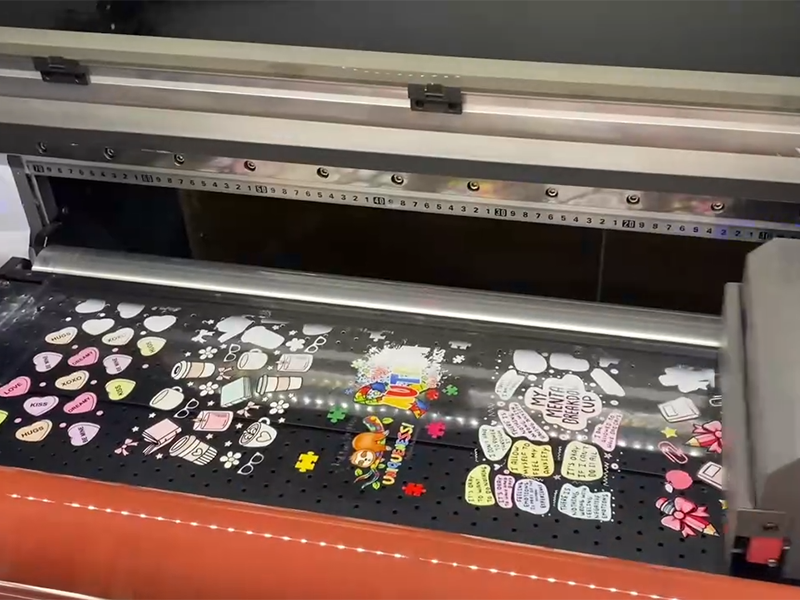
Textile printing continues to evolve as demand shifts toward personalized apparel, high-definition graphics, and flexible on-demand production models. In recent years, sublimation printing has emerged as one of the most effective methods for producing vibrant, durable prints on fabrics and soft signage materials. This is not a fleeting trend; industry reports show that the global textile digital printing market is growing steadily as brands and manufacturers look for faster turnaround times and broader creative possibilities.
Within this context, sublimation printers are recognized not merely as another piece of equipment, but as core production assets that address specific operational challenges in modern textile workflows. To understand the value of sublimation technology, it is important to look beyond the basic definition of the process and focus on how it solves real technical and business problems in fabric printing.
Sublimation printing works by transferring dyes from specially formulated ink into polymer-coated fabrics or materials using heat and pressure. The ink molecules turn into gas and penetrate the fibers, resulting in a print that becomes part of the material itself rather than sitting on top of it. This embedded color delivers unmatched wash durability, color vibrancy, and softness—qualities that are particularly important in textile segments such as sportswear, fashion garments, and home furnishings.
Recent industry developments indicate that brands and textile manufacturers are increasingly adopting sublimation as part of hybrid production models that combine digital and traditional techniques. In markets where quick sample turnaround and low minimum orders are key competitive advantages, sublimation printing allows factories and studios to produce high-quality pieces without the setup delays and costs often associated with screen printing.
One of the primary advantages of sublimation printing lies in its stability across high-volume runs. Many conventional dye-based systems suffer from color variation, banding, or limited fabric compatibility. Sublimation printers, on the other hand, maintain consistent output even during long shifts, provided that the machine design supports stable ink delivery and precise temperature control. For operations that run 8-hour, 24-hour, or even multi-shift production schedules, this predictability translates directly into fewer stoppages and lower rework rates.
Another challenge addressed by sublimation technology is the need for soft hand feel and wash-fastness—attributes that are increasingly demanded by downstream brands, retailers, and end customers. Because the dye becomes part of the fiber, sublimated fabrics retain their original texture and breathability while offering superior resistance to fading and wash degradation. As a result, sublimation is widely used in the production of sports apparel, activewear, custom jerseys, fashion dresses, soft signage, flags, and home textiles such as curtains and cushion covers.
In the broader industry landscape, digital textile printing trends are shifting toward approaches that enable both rapid prototyping and full production scale output. This has made sublimation an attractive choice not only for small design studios and customization shops but also for larger mills and contract manufacturers. By integrating sublimation printers into their workflows, production facilities can shorten lead times while maintaining quality standards that meet or exceed traditional printing methods.
From a technical standpoint, evaluating sublimation printers involves understanding how core subsystems impact output stability. These include ink circulation and consistency, head height stability, heat press transfer calibration, and media handling. For example, uneven ink flow or temperature drift can lead to color inconsistency—issues that are often overlooked in low-cost or poorly supported equipment. Machines designed with industrial-grade components provide greater control over these variables, ensuring that prints remain consistent from the first piece to the last in a production run.
Operational reliability is another important consideration. Textile factories and printing studios face pressure to minimize downtime because production delays result in missed deadlines and higher labor costs. Sublimation printers built with rigid mechanical structures, precision motion systems, and robust electronics reduce the likelihood of frequent maintenance interruptions. This is especially valuable in environments where multiple machines run concurrently to meet shipment schedules.
Sublimation printing also addresses questions related to cost predictability. While initial investment in higher-end models may be greater than entry-level alternatives, the total cost of ownership often favors well-engineered systems due to reduced waste, longer machine life, and higher first-pass yield rates. For operations producing garments or soft signage that require reliable color performance, this balance between quality and cost becomes a strategic advantage.
The digital textile market has also been influenced by sustainability considerations. Sublimation printing, when paired with recycled fabrics or water-efficient pre- and post-processing, fits into environmentally conscious production models that many brands are now prioritizing. This can be an important differentiator when engaging with brand partners or larger retail groups that emphasize environmental compliance in their supplier selection criteria.
Application examples further illustrate where sublimation technology adds value: a sportswear supplier can use sublimation for high-resolution designs on poly fabrics that will endure sweat and washing; a soft signage manufacturer can produce vibrant retail banners that maintain color saturation outdoors; a fashion boutique can quickly test new patterns without the setup costs of traditional methods.
Despite its advantages, successful integration of sublimation printing requires thoughtful workflow planning. Fabric pre-treatment, heat press timing, and environmental control are all factors that influence final output quality. Effective training and ongoing technical support extend machine uptime and help teams navigate subtle variables that affect color reproduction and transfer efficiency.
In summary, sublimation printers offer a practical and robust solution for textile and soft signage production challenges. Their ability to deliver high-quality, soft-hand prints with excellent durability, combined with stable performance in extended runs, makes them an appealing technology for a wide range of fabric printing applications. As production demands continue to diversify, sublimation printing provides a reliable pathway to meet evolving quality expectations without sacrificing efficiency.
By focusing on the aspects of performance, reliability, and application flexibility, sublimation printers serve not just as equipment, but as solutions that enable comprehensive printing workflows capable of adapting to both current and future production needs.

Shenzhen Shenchuangxing provides DTF, UV DTF, and flatbed printers for global print businesses. Our patented tech, strict QC, and custom configurations ensure efficiency, stability, and reliability. Trusted by clients worldwide. Request a quote today.
Room 202, Building A, No. 10, Cichang Road, Baoan Community, Yuanshan Subdistrict, Longgang District, Shenzhen, Guangdong Province, China
Copyright © 2026 by Shenzhen Shenchuangxing Technology Co., Ltd. Privacy Policy
 EN
EN