The apparel printing industry has undergone significant changes in recent years. Customization, shorter order cycles, and diversified fabric requirements have become standard rather than exceptions. As a result, printing technologies that offer flexi...
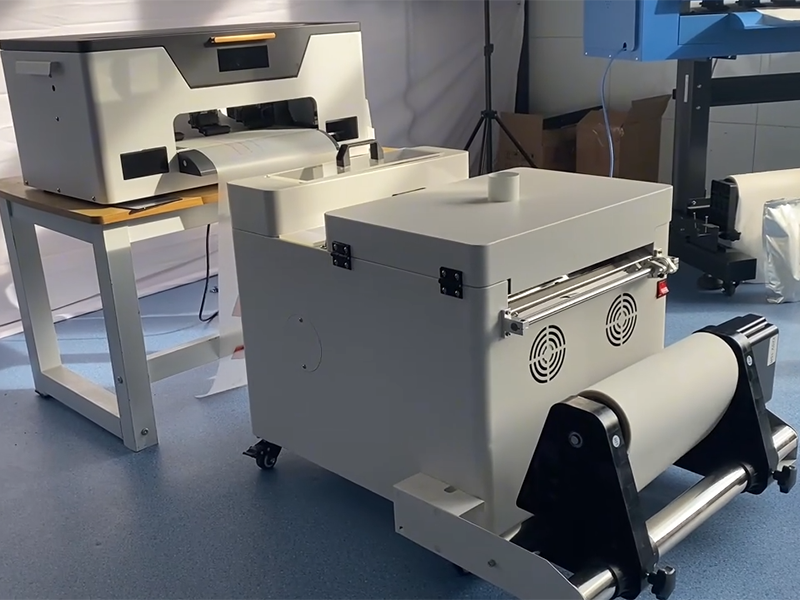
The apparel printing industry has undergone significant changes in recent years. Customization, shorter order cycles, and diversified fabric requirements have become standard rather than exceptions. As a result, printing technologies that offer flexibility, stability, and predictable production costs are increasingly favored. Among these technologies, DTF printers (Direct to Film printers) have emerged as a practical solution for garment printing businesses seeking adaptable and efficient workflows.
DTF printing is now widely discussed within the garment decoration sector, especially in applications such as custom T-shirt printing, sportswear branding, promotional apparel, and small-batch fashion production. Its growing adoption is closely tied to the way it simplifies production while expanding material compatibility.
DTF printing is a digital transfer process that involves printing designs onto a PET film using pigment-based inks. After printing, a layer of hot-melt adhesive powder is applied to the wet ink and then cured through controlled heating. The completed transfer can later be applied to fabric using a heat press.
This process separates printing from final application, which provides greater flexibility in production planning. Designs can be printed in advance, stored, and transferred only when needed. Compared with direct-to-garment printing, DTF printing eliminates the need for fabric pretreatment and controlled humidity environments, reducing both labor complexity and preparation time.
From a technical standpoint, the performance of a DTF printing machine depends on ink stability, white ink circulation, temperature control, and precise film feeding. When these elements are properly integrated, DTF printing delivers consistent results suitable for both short runs and continuous production.
One of the most common challenges in garment printing is material restriction. Traditional printing methods often work best on specific fabrics, which limits application scope and increases operational risk. DTF printers effectively address this issue by supporting a wide range of materials, including cotton, polyester, blended fabrics, denim, nylon, and even leather.
This broad compatibility makes DTF printing particularly suitable for businesses handling diverse apparel orders. Whether producing casual wear, workwear logos, sports uniforms, or promotional garments, DTF printers provide consistent adhesion and color performance across different fabric types.
In practical applications, DTF printers are frequently used for chest logos, sleeve graphics, multi-color designs, and fine-detail prints. The ability to reproduce sharp details and vibrant colors makes DTF printing a reliable option for fashion sampling and customized apparel projects.
Production efficiency is no longer defined solely by speed. In modern apparel printing, flexibility and responsiveness are equally important. DTF printing supports on-demand production models by allowing transfers to be prepared independently from garment processing. This reduces bottlenecks during peak order periods and helps balance workloads.
For small and medium production runs, DTF printers offer a clear advantage over screen printing, which requires setup time and higher minimum quantities. At the same time, DTF printing avoids some of the environmental and maintenance challenges associated with direct-to-garment systems.
Many printing operations use DTF transfers as part of a hybrid workflow, combining them with other printing technologies to meet different customer requirements. This adaptability is one reason why DTF printers have become a standard consideration in garment printing equipment planning.
While the DTF printing process is relatively straightforward, machine quality plays a decisive role in long-term performance. Common operational issues such as ink clogging, uneven white ink coverage, or film feeding deviation often stem from insufficient machine design or low-quality components.
A well-engineered DTF printer integrates stable ink supply systems, continuous white ink circulation, and accurate temperature management. These features help maintain print consistency during extended production runs and reduce downtime caused by maintenance issues.
When evaluating DTF printers for sale, it is important to consider not only print resolution and speed, but also mechanical structure, ink system design, and ease of operation. Reliable performance over time directly affects production efficiency and overall cost control.
DTF printing is often considered a cost-effective entry point into garment printing due to its relatively low initial investment and predictable operating expenses. Consumables such as inks, films, and adhesive powder are widely available, and production waste is generally lower than with traditional methods.
From a long-term perspective, DTF printers support sustainable business growth by enabling diversified product offerings without significant changes to existing workflows. This makes them suitable for both new printing operations and established businesses expanding into customization.
The growing demand for DTF printing solutions has also driven interest in factory-direct sourcing. Working with a professional DTF printer manufacturer allows access to optimized configurations, consistent quality standards, and technical support aligned with real production needs.
DTF printers are not positioned as a replacement for all garment printing technologies, but rather as a complementary solution that addresses specific market demands. Their strength lies in versatility, ease of use, and adaptability to changing order patterns.
As customization continues to influence consumer expectations, DTF printing offers a practical way to meet diverse design requirements without compromising efficiency. Businesses that integrate DTF printers into their production strategy are better equipped to respond to market changes and expand application possibilities.
Choosing the right DTF printing equipment involves understanding both the technology and the manufacturing support behind it. Stable machines, reliable consumables, and professional technical guidance form the foundation of successful DTF printing operations.

Shenzhen Shenchuangxing provides DTF, UV DTF, and flatbed printers for global print businesses. Our patented tech, strict QC, and custom configurations ensure efficiency, stability, and reliability. Trusted by clients worldwide. Request a quote today.
Room 202, Building A, No. 10, Cichang Road, Baoan Community, Yuanshan Subdistrict, Longgang District, Shenzhen, Guangdong Province, China
Copyright © 2026 by Shenzhen Shenchuangxing Technology Co., Ltd. Privacy Policy
 EN
EN