 EN
EN

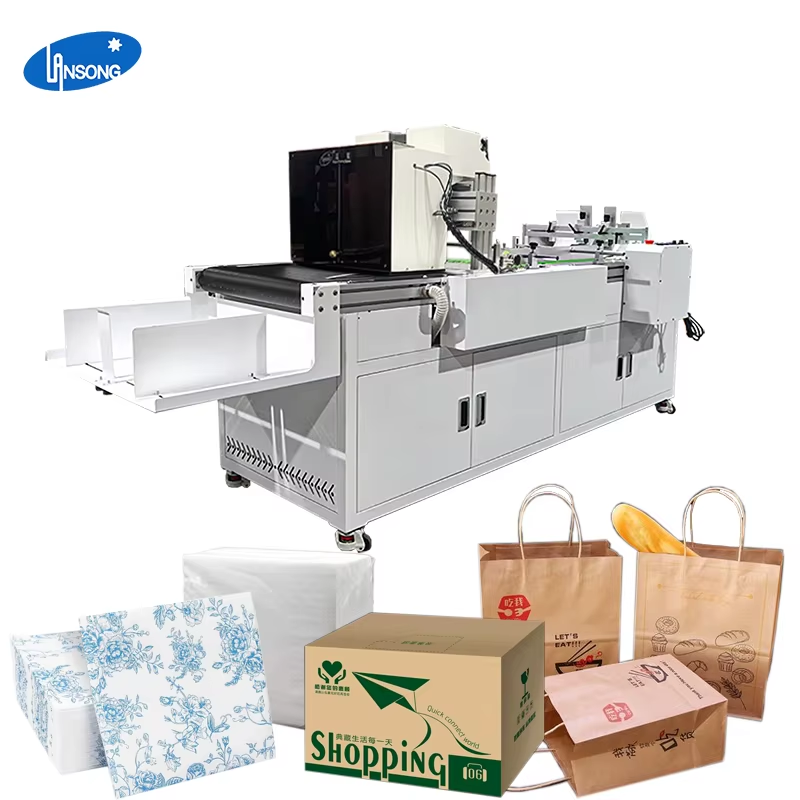
Understanding the Real Investment Behind Paper Bag Printing
When small business owners evaluate packaging options for the first time, the fundamental question arises: Is a paper bag printer truly worth the investment? My decade of experience working with printing startups and packaging entrepreneurs reveals that the answer depends on three critical factors—your production strategy, target market positioning, and long-term business horizon. A paper bag printer represents far more than industrial equipment; it serves as your gateway into the rapidly expanding sustainable packaging sector, where market demand continues surging as consumers increasingly reject single-use plastics in favor of eco-friendly alternatives.
At Shenzhen Shenchuangxing Technology Co., Ltd., we specialize in advanced DTF (Direct-to-Film), UV DTF, and DTG (Direct-to-Garment) printing solutions engineered specifically for modern paper bag production workflows. Our field experience consistently demonstrates that entrepreneurs achieving the fastest return on investment begin with entry-level semi-automatic systems rather than overextending with high-capacity fully automated lines that demand substantial capital commitment and extended payback periods.
Analyzing the Economic Fundamentals
The financial landscape of acquiring a paper bag printer encompasses both acquisition costs and ongoing operational considerations. Entry-level semi-automatic machines suitable for emerging small businesses typically offer production capacities ranging from 200 to 280 bags per minute, providing sufficient throughput for local market demands without overwhelming your operational infrastructure.
To illustrate the economic dynamics, consider a neighborhood bakery currently sourcing branded bags from third-party suppliers. By transitioning to in-house production with a paper bag printer, this establishment could reduce per-unit packaging costs significantly while gaining complete control over design iterations and inventory timing. The accumulated savings typically enable equipment payback within 14 to 18 months—a benchmark consistent across the packaging industry for well-positioned small businesses.
Our Shenchuangxing printing technologies incorporate precision servo control systems that minimize material waste during machine setup and operation. This efficiency proves particularly valuable for small businesses operating with tight margins, ensuring maximum utilization of every meter of kraft paper and biodegradable substrate purchased.
Strategic Advantages Beyond Direct Savings
While cost reduction remains compelling, owning a paper bag printer unlocks strategic capabilities that directly drive revenue growth. Industry research demonstrates that custom-branded packaging increases customer retention rates substantially while generating organic word-of-mouth marketing equivalent to significant advertising value per bag carried through public spaces.
Small businesses leveraging in-house printing capabilities can offer responsive customization services—same-day turnaround for corporate events, seasonal promotional campaigns, or limited-edition product launches. These value-added services command premium pricing and create meaningful differentiation from competitors limited to generic, off-the-shelf inventory. Furthermore, the ability to incorporate variable data such as QR codes or personalized messages transforms each paper bag into an interactive marketing channel that bridges physical and digital customer experiences.
Shenchuangxing's UV DTF printers deliver high-resolution, full-color output across diverse paper substrates without the prohibitive setup requirements associated with traditional flexographic printing. This technological flexibility enables small print shops to profitably accept short-run orders—as few as fifty bags—that were previously economically viable only for large-scale operations or specialized screen printing houses.
Technical Accessibility and Operational Expertise
A persistent misconception suggests that paper bag printing equipment requires extensive technical expertise to operate effectively. Contemporary semi-automatic machines feature intuitive PLC touchscreen interfaces and modular architectures allowing operators to transition between bag sizes within minutes. However, maximizing operational efficiency does require foundational knowledge of material science—understanding how different paper weights interact with adhesive systems and ink chemistries.
The Shenchuangxing technical support team provides comprehensive training extending beyond basic machine operation to encompass optimization methodologies: calibrating tension controls to prevent substrate breakage, fine-tuning print head configurations for consistent color density, and implementing preventive maintenance schedules that avoid costly production interruptions. Businesses investing in this knowledge base typically achieve production efficiency improvements of 15 to 20 percent compared to operations treating equipment as purely automated black boxes.
Selecting machinery with appropriate quality certifications further streamlines the learning curve while ensuring safety standards and production consistency that protect both your workforce and capital investment.
Sustainability as Market Opportunity
The cost-effectiveness equation has evolved considerably alongside shifting consumer preferences. Eco-friendly paper bag printing systems—those engineered to process recycled kraft paper, biodegradable coatings, and water-based ink formulations—command higher initial investment but provide access to premium market segments willing to pay for environmental responsibility.
Recent consumer behavior studies indicate that nearly three-quarters of shoppers express willingness to pay modest premiums for products featuring sustainable packaging. For small businesses, this market dynamic means custom-printed eco-conscious bags can be positioned at higher price points compared to conventional alternatives. The enhanced margin structure typically offsets increased material costs within the first operational year.
Shenchuangxing printing solutions support environmentally compliant ink systems—including water-based and UV-curable formulations—that deliver vibrant, durable results on uncoated recycled stocks. This technical capability enables small printers to certify products for clients requiring recognized environmental standards, accessing corporate accounts that prioritize supply chain sustainability in their vendor selection criteria.
Scaling Considerations: Matching Capacity to Growth
The most cost-effective approach for emerging small businesses involves aligning equipment capabilities with realistic production projections rather than aspirational capacity demands. Semi-automatic paper bag printers generating 400 to 800 bags hourly adequately serve businesses with local or regional client bases, while fully automated systems exceeding 1,200 bags hourly become necessary only when serving national distribution networks with consistent high-volume requirements.
Critically, many contemporary machines—including those compatible with Shenchuangxing printing modules—offer modular upgrade pathways. A business might commence operations with fundamental bag formation capabilities, subsequently adding inline printing units, automated handle attachment systems, or counting and bundling modules as revenue stabilizes and demand patterns clarify. This incremental approach distributes capital expenditure across time, substantially reducing financial risk compared to comprehensive system acquisition upfront.
Industry analysis consistently shows that small printing enterprises focusing on specialized market niches—boutique coffee roasters, artisanal food producers, cosmetic startups—achieve profitability milestones faster than competitors pursuing commoditized high-volume segments. The capability to offer design consultation alongside production services creates value propositions that pure manufacturers cannot replicate.
Total Cost of Ownership: Beyond the Purchase Price
Evaluating true cost-effectiveness requires examining total cost of ownership rather than acquisition price alone. Quality paper bag printers constructed with robust steel frameworks and precision servo drive systems typically deliver operational lifespans of 10 to 15 years when maintained appropriately, whereas budget-oriented alternatives may require substantial repairs or replacement within 3 to 5 years under equivalent duty cycles.
Systematic monthly maintenance—including lubrication of mechanical drive components, cleaning of adhesive application systems, and calibration of sensor arrays—prevents the unplanned downtime that erodes profitability. Shenchuangxing's after-sales support infrastructure encompasses remote diagnostic capabilities and expedited spare parts logistics, ensuring that technical disruptions resolve within 24 to 48 hours rather than extending across weeks.
Energy consumption represents an additional ownership cost factor warranting consideration. Modern equipment incorporating variable frequency drive technology typically reduces electricity usage by 20 to 30 percent compared to legacy systems, generating meaningful operational savings given that production equipment frequently runs 8 to 12 hours daily in small business environments.
Final Assessment: Strategic Investment for Qualified Operations
Is a paper bag printer cost-effective for small businesses? The evidence supports affirmative conclusions for operations meeting specific criteria: print shops, packaging distributors, or retail chains with consistent monthly bag demand exceeding approximately 5,000 units. For these enterprises, in-house production typically delivers substantial cost advantages compared to outsourced procurement while simultaneously opening new revenue streams through customization services.
The critical success factors involve selecting equipment appropriately scaled to current needs with provision for growth, investing comprehensively in operator training and process knowledge, and positioning printing capabilities as value-added services rather than mere cost centers. With functional entry-level systems widely accessible and industry-standard financing arrangements commonly available, the barrier to market entry has never been lower for small businesses prepared to participate in the sustainable packaging transformation.
At Shenzhen Shenchuangxing Technology Co., Ltd., we recommend prospective equipment buyers conduct straightforward break-even analyses: calculate current annual expenditures on bag procurement, project conservative first-year production volumes (typically 60 to 70 percent of rated equipment capacity), and incorporate prevailing local labor rates. When analytical results suggest equipment payback within 18 to 24 months, a paper bag printer investment represents not merely a cost-effective operational decision, but a strategic competitive advantage within an increasingly environmentally conscious marketplace.
Table of Contents
- Understanding the Real Investment Behind Paper Bag Printing
- Analyzing the Economic Fundamentals
- Strategic Advantages Beyond Direct Savings
- Technical Accessibility and Operational Expertise
- Sustainability as Market Opportunity
- Scaling Considerations: Matching Capacity to Growth
- Total Cost of Ownership: Beyond the Purchase Price
- Final Assessment: Strategic Investment for Qualified Operations